6-Week Course · Intermediate
Audition Preparation Lab
A focused programme built around the practical and psychological demands of the audition room.
6-Week Course · Intermediate
A focused programme built around the practical and psychological demands of the audition room.
Programme Overview
The audition room is a specific and unusual environment. The presence of observers who are evaluating, the time pressure, the unfamiliar space, the compressed window for demonstrating what you can do — these conditions are unlike any other aspect of acting, and they require preparation that is different in kind from standard scene work or studio training.
The Audition Preparation Lab was designed to address this. Over six weeks, students work intensively on the skills and habits that make auditions more productive — not more likely to succeed in any particular instance, but better structured, more honest, and less driven by anxiety and misunderstanding about what auditioners are actually looking for.
David Osei, who leads this programme, is explicit about what audition preparation can and cannot do. Good preparation does not guarantee results. An audition is a commercial and artistic assessment conducted under conditions that neither auditioner nor actor fully controls. What preparation does — when done well — is ensure that the work itself is not undermined by avoidable problems.
An audition is not a performance. It is a conversation — one in which you are demonstrating your readiness to begin a collaboration, not your ability to produce a complete result.
The first session addresses the perceptual reality of an audition. What does an auditioner actually see and hear in the first thirty seconds? What habits — physical, vocal, behavioural — communicate self-consciousness, under-preparation, or anxiety before the work begins? Students examine footage of auditions and develop a vocabulary for discussing what they observe.
Selecting appropriate material is one of the most consistently mishandled aspects of audition preparation. Students learn to assess texts against practical criteria: dramatic specificity, appropriate length, clarity of situation and objective, suitability to their current range, and the degree to which the material allows them to demonstrate listening as well as speaking.
Each student begins work on two contrasting monologues — typically one classical and one contemporary — and receives initial feedback on their textual analysis and preliminary work.
Many auditions involve scene or two-person work, and many include cold reading — working with a text the actor has not seen before. These sessions address both. Cold reading exercises focus on the specific skills required: rapid scanning for character situation and objective, finding the verb in an action before you understand the whole scene, and remaining present with a partner under conditions of genuine uncertainty.
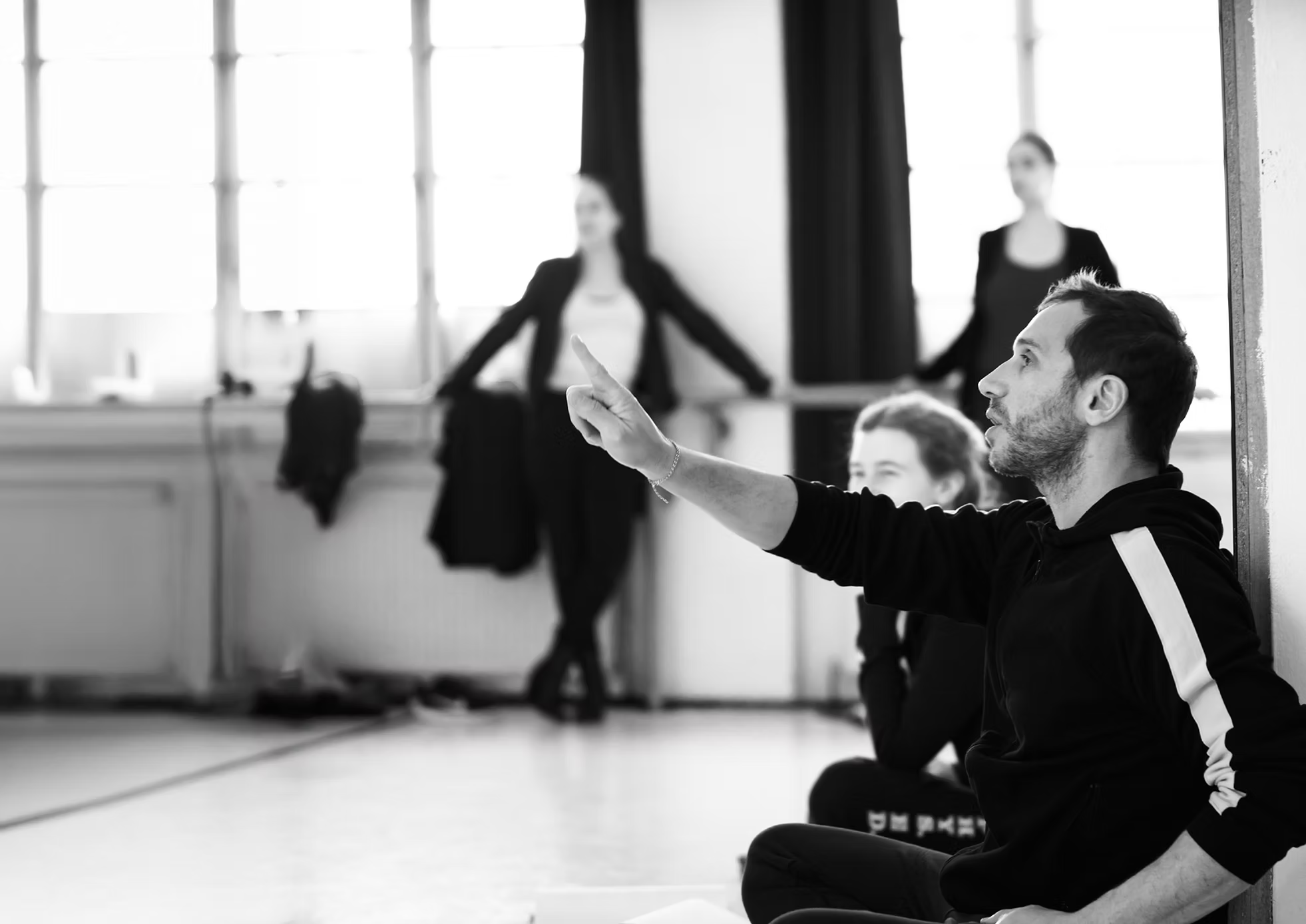
Week five replicates audition conditions as closely as practicable. Students enter the space as they would an audition room, introduce themselves, perform their prepared work, and respond to direction from David. The feedback is specific and structured. Students observe each other's work and contribute observations, developing their own analytical eye in the process.
The final session reviews what has been worked on, addresses any outstanding technical questions, and places the programme's work in the broader context of an actor's development. There is discussion of different audition contexts — drama school, fringe theatre, community productions, film and television — and what distinguishes them.
The Audition Preparation Lab does not exist to make actors more likely to be cast in any particular project. The factors that determine audition outcomes include many things outside an actor's control: the existing cast, the director's specific vision, budget, availability, physical requirements, and the simple variability of one human being's response to another on a given day.
What this programme can offer is the opportunity to bring better preparation, clearer thinking, and reduced anxiety to the audition process — and to learn from each audition experience rather than treating results as purely final verdicts on your ability.
The Audition Preparation Lab is designed for students who have some prior scene work experience — whether through Acting Foundations or comparable training elsewhere. Students who have never studied acting formally will typically benefit from beginning with Acting Foundations before enrolling in the Lab.
If you are uncertain whether your experience level is sufficient, please contact us. We will ask a few straightforward questions and advise accordingly.
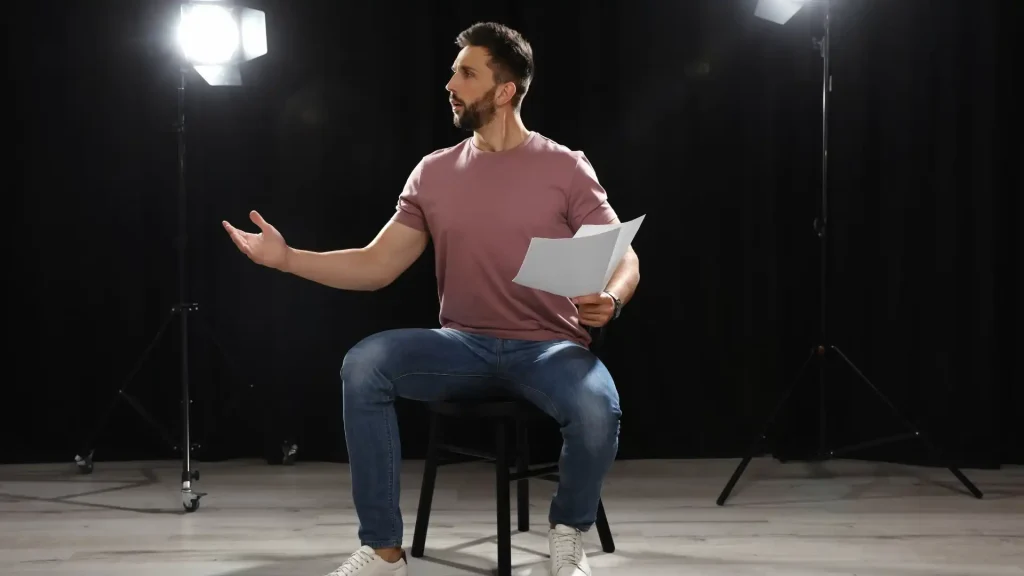
The Audition Preparation Lab runs over six weeks, with one three-hour session per week. Thursday evening sessions are the primary offering; an additional slot may be added at certain intakes depending on demand. Class sizes are limited to ten students to ensure each student receives meaningful individual attention.
The programme runs in alignment with the main intake schedule — January, April, and September — though not all intakes will have an Audition Lab cohort. Contact us to confirm current availability.
Contact us to confirm current availability or to discuss whether your experience level is suitable.
Get in Touch